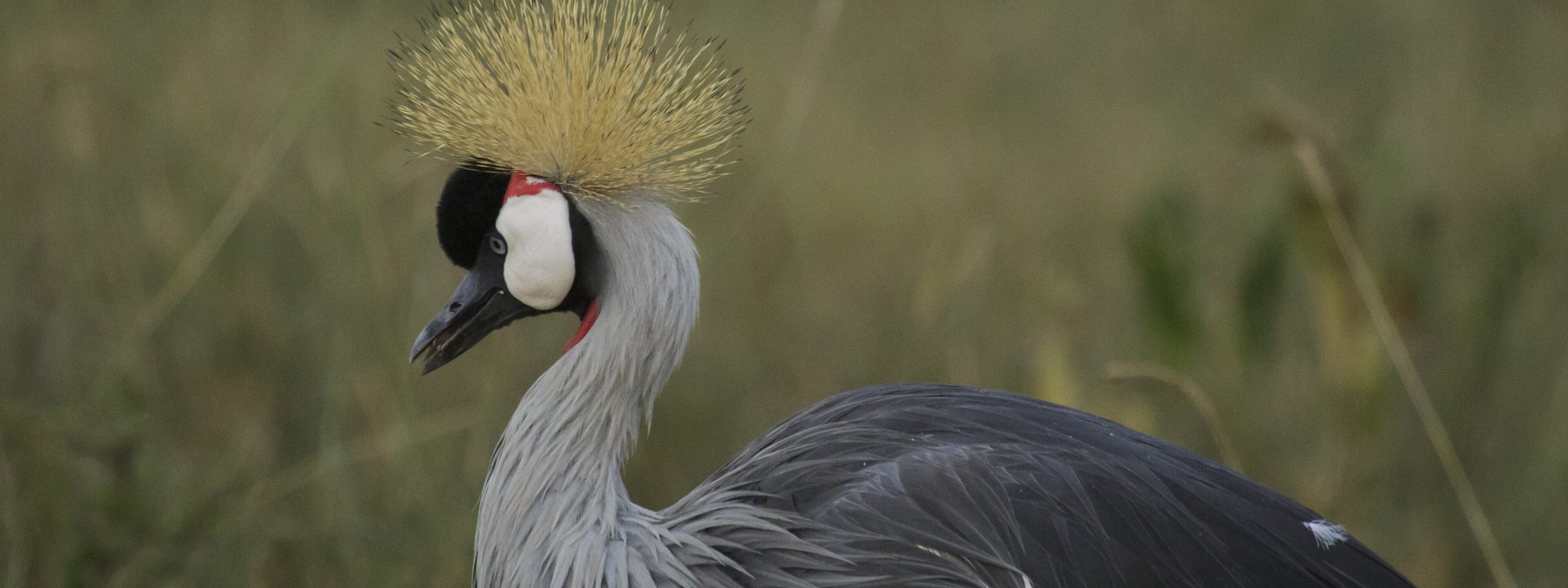
- Birding
- From Nairobi
Kenya Endemics Birding Safari
- Days
- 12
- Nights
- 11
- Park
- 1
Overview
The Kenya Endemics Birding Tour is a special birding safari that focuses on finding all the recognized endemic birds of Kenya. On this tour you stand a chance of scoring the Kenyan endemic species in a medium-length and affordable trip. This is the first safari of its kind and we have put great effort to ensure that all logistics are in place to guarantee the best tour results.
On the tour, we currently do not visit the habitat for Tana River Cisticola (Cisticola restrictus). This species, although currently recognised as a Kenyan endemic, based on museum specimens, represents an uncertain taxon. No recent expedition (post the year 1972) has seen a live specimen or recorded it by photograph or audio. Therefore, the species still remains virtually unknown.
Another “species” we do not visit on the Kenya Endemics Birding Tour is the Kulal or Mt. Kulal White-eye (Zosterops poliogaster kulalensis). This taxon is sometimes split from the Montane or Heuglin’s White-eye (Zosterops poliogaster) complex, although there has not been full scientific justification to split it to date. Most taxonomy authorities prefer to leave it as a sub-species or race. Our current basis for the taxonomy of East African white-eyes follows that outlined in Pearson & Turner (2017), the most authoritative and most updated taxonomy of the genus Zosterops across East Africa. This published work was based on the phylogeny of Cox (2013) and Cox et al. (2014), and is available in the Scopus Journal (issue 37.1). A special expedition is required to visit Mt Kulal, the remote site where the Kulal White-eye lives.
Being a birding tour that visits many endemic species areas and Important Bird Areas (IBAs), this safari will score many other special birds and mammals. Several near-endemic bird species are recorded on the safari, including species that are endemic to the East African Community countries (Kenya, Tanzania and Uganda). See the highlights below for the near-endemics that may be recorded on the tour. However, the main focus of this safari is finding all the Kenyan endemics, and much of the time will be spent seeking these species.


1 / 7
Itinerary
Day by day
Day 1
Arrival in Nairobi and afternoon flight to the coast
We shall arrive on our Kenya Endemics Birding Tour via Nairobi, the tourism capital of Kenya. From here we shall take a short domestic flight to the Kenyan coast.
Depending on your arrival time and how tired you may be from the flights, you can choose to add an extra birding session this afternoon. Otherwise, you can relax and enjoy the local birds from your hotel.
Night in Watamu.
Days 2–3
Arabuko Sokoke Forest, Sabaki River Mouth and Mida Creek
Home of the endemic Clarke’s (Kilifi) Weaver. Note: the race of Forest or Short-tailed Batis (Batis mixta ultima) found here is sometimes referred to as the Sokoke Batis.
Birding at the coastal lowland is best during the early morning hours, so we shall maximise the mornings for forest birding. Forest birding will start early on both days, with afternoons dedicated to aquatic habitats. We hope to see many bird species during these forest walks. The local endemic sengis and monkey species will also be plenty.
In the afternoons, we shall visit the marine wetlands for some water birds. On one afternoon, we shall visit Mida Creek for the marine shorebirds, terns and gulls, depending on the tides, among many other abundant birds. Another afternoon we shall visit the Sabaki River Mouth, which is a haven for gulls and terns.
On one evening at Arabuko, we shall try a search for nocturnal species of owls and nightjars.
Nights in Watamu.
Days 4–5
Taita Hills
Home of the endemic Taita White-eye, Taita Thrush and Taita Apalis.
We may choose to take another morning walk in Arabuko Sokoke Forest if we still need to try for some more birds.
We shall then drive to the Taita Hills, mainly searching for the local endemics. This indeed forms a great location on our Kenya Endemics Birding Tour and the endemics here are always a highlight.
There will be many other exciting birds of this area that we shall enjoy here as we seek the endemics.
Nights in Taita.
Day 6
Taita Hills to Nairobi
We shall still have this morning to try for any species we are missing in the Taita Hills.
After leaving Taita, we will enjoy birding along the Nairobi–Mombasa road. We shall enjoy lunch en route.
Night in Nairobi.
Day 7
Nairobi National Park
Home of the endemic Snowy (Brown-and-white) Barbet and Kikuyu White-eye. Note: a little-known “race” of Long-billed Pipit (Anthus similis) found here has been proposed as a distinct species, the “Nairobi Pipit” (Anthus chyuluensis). This work was published in the Ostrich Journal 84 (2); more field work was proposed to conclusively analyse the “race”.
We shall spend the entire day in Nairobi National Park, which has always proven very successful on our birding tours. This is Kenya’s oldest national park, located just 7 kilometres from the edge of the Nairobi city centre. Indeed, this is Kenya’s capital birding location, with over 500 species recorded in the park.
The park also hosts four of the African Big Five (Black Rhino, African Lion, Leopard and Cape Buffalo) and many other interesting animals that you’ll enjoy during the Kenya Endemics Birding Tour.
Night in Nairobi.
Day 8
Nairobi and Ngong Forest, then to Lake Naivasha
Home of the endemic Snowy (Brown-and-white) Barbet and Kikuyu White-eye.
We shall have the morning to keep trying for endemics around Nairobi city, birding around the Ngong Forest area, where we hope to connect with many birds.
In the afternoon, we shall proceed to Lake Naivasha. On our way we may make a brief stop-over at a local wetland to spot some water birds.
Night in Naivasha.
Day 9
Kinangop Grasslands and Aberdare National Park, then to Mt. Kenya
- Aberdare
Home of the endemic Kikuyu White-eye, Sharpe’s Longclaw, Aberdare Cisticola, Hinde’s Babbler and Jackson’s Francolin.
We shall start the day early and continue with our Kenya Endemics Birding Tour, moving to this highland region. Home to some of the best of Kenya’s endemic birds, the Kinangop area promises to be rewarding on each trip. The biggest quest here will be the Endangered Sharpe’s Longclaw, a species whose population and habitat are decreasing rapidly.
We shall start from the lower grasslands and gain elevation up to the Aberdare National Park. Local wetlands will also be sampled for the highland water birds.
Later in the afternoon we shall proceed to Mt. Kenya, where we seek out the rare Hinde’s Babbler.
Night at Mt. Kenya.
Days 10–11
Shaba National Reserve
Home of the endemic Williams’s Lark.
We shall have a chance to search for our endemics around Mt. Kenya on the first morning.
We shall later leave for Shaba National Reserve, a very interesting destination on our Kenya Endemics Birding Tour. We shall spend time scouting for the Data Deficient Williams’s Lark as we enjoy the local mammals, such as Leopard, Beisa Oryx, Gerenuk, Grevy’s Zebra, Reticulated Giraffe, Lion and Elephant. More birds will be expected here to add to our list.
This is an amazing part of Kenya and allows for excellent dry-country birding. Many of the typical north-east African dryland birds are present here and the habitat will provide a huge species list.
Nights in Shaba.
Day 12
Shaba National Reserve to Nairobi
We shall have the chance to try again for any special birds we are still missing this morning.
Later we drive to Nairobi, where we catch our evening flights home, marking the end of our exciting Kenya Endemics Birding Tour.
Highlights
What you may see
- Highlight Kenyan endemic birds
- Clarke’s (Kilifi) Weaver, Taita Thrush, Taita Apalis, Taita White-eye, Kikuyu White-eye, Snowy (Brown-and-white) Barbet, Aberdare Cisticola, Jackson’s Francolin, Hinde’s Babbler, Sharpe’s Longclaw, Williams’s Lark
- Highlight near-endemic birds shared between Kenya and Tanzania
- Sokoke Scops-Owl, Grey-crested Helmetshrike, Red-throated Tit, Northern Pied Babbler, Hildebrandt’s Starling, Abbott’s Starling, Kenrick’s Starling, Amani Sunbird, Tsavo Sunbird, Taveta Golden Weaver, Jackson’s Widowbird, Sokoke Pipit, Southern Grosbeak Canary, Sentinel Lark
- Highlight near-endemic birds shared between Kenya, Tanzania and Uganda
- Hartlaub’s Turaco, Lynes’s Cisticola, Hunter’s Cisticola, Black-lored Babbler, Kenya Rufous Sparrow
- Highlight mammals and others
- Leopard, African Lion, Cheetah, Savannah Elephant, White Rhino, Black Rhino, Cape Buffalo, Nile Crocodile
- Habitats covered
- Savannah, Highland Moist Forest, Alpine Moorland, Highland Grasslands, Coastal Lowland Forest, Inland Wetlands, Ocean Shores, Semi-arid Scrubland, Semi-desert Lava
- Photographic opportunities
- Excellent
- Special moments
- Kenya’s endemic birds, a visit to the historic Ivory Burning Site, sighting the Lunatic Express railway line, the African Big Five
Where you will go
The park on this safari


Plan with us
Plan this safari with us
Tell us your dates and where you are staying. We will reply with a route, lodges and a price, and change any of it to suit you.
Call or WhatsApp
+254 707 207 838Send an enquiry
About: 12 Days Kenya Endemics Birding Safari from Nairobi
You might also like
More birding tours
 Birding
12 days · 11 nights
Coastal Kenya Birding Safari
Nairobi to Amboseli · Tsavo West · Taita Hills · Tsavo East
Price on request
 Birding
 Birding
16 days · 15 nights
Kenya Birding Safari
Nairobi to Aberdare · Samburu · Lake Nakuru · Masai Mara
Price on request